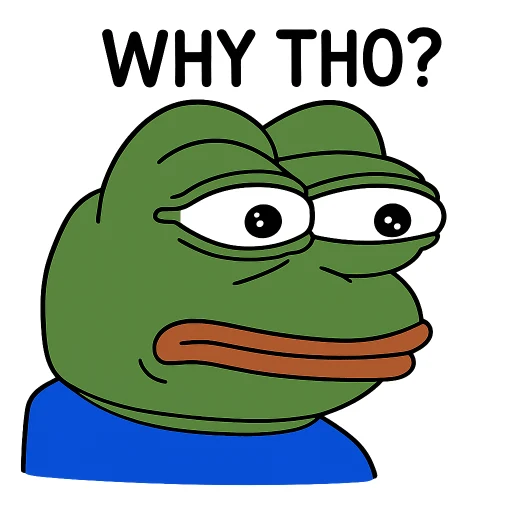
Pepe became useful as a reaction meme because the character can be redrawn into an unusually broad emotional range. The same recognizable face can look delighted, devastated, suspicious, proud, uncomfortable, or entirely out of energy.
That range does not create a single official meaning for every image. A reaction gets its meaning from expression, caption, placement, and the message it follows.
How to read a Pepe reaction
Start with four signals:
- Expression: eyes and mouth usually carry the basic emotion.
- Pose: crossed arms, dancing, hiding, or facepalming changes the intensity.
- Caption: text can make the reaction direct, ironic, or deliberately absurd.
- Context: the same smile after good news and after a bad idea may communicate two very different things.
Happy and smiling Pepe
A relaxed smile usually means approval, contentment, or quiet confidence. A bigger grin pushes the meaning toward celebration or laughter. In an ironic context, an overly calm smile can also mean “I have seen the chaos and chosen to accept it.”
Use a happy reaction after good news, a successful plan, a joke that landed, or a message that deserves uncomplicated encouragement.
Sad and crying Pepe
Sad Pepe is one of the most recognizable emotional versions. It can express genuine sympathy, loneliness, disappointment, or comic overreaction to a minor inconvenience.
The size of the problem changes the tone. After serious personal news, add supportive text. After discovering that the last slice of pizza is gone, the same tearful face works as deliberate exaggeration.
Smug and confident Pepe
A half-smile with relaxed eyes often communicates confidence, satisfaction, or “I knew this would happen.” It can be playful between friends, but it may feel dismissive in a serious disagreement.
A smug expression works best when the relationship and joke are already clear. If someone is asking for real help, choose a more supportive reaction.
Shocked and wide-eyed Pepe
Wide eyes and an open mouth communicate surprise before the viewer reads anything else. These reactions range from amazed to alarmed. Attach one to the exact message that caused the surprise for the clearest result.
Thinking and suspicious Pepe
A hand near the face, narrowed eyes, or a sideways glance suggests evaluation. Thinking Pepe means the idea is under consideration. Side-eye Pepe suggests the explanation has not been accepted yet.
These reactions are useful when you want to acknowledge a questionable claim without immediately starting a debate.
Facepalm and awkward Pepe
A facepalm usually means frustration, second-hand embarrassment, or recognition of an avoidable mistake. An awkward waiting expression is milder: something uncomfortable happened and nobody has decided what to say.
Both work well in group chats because they respond to tone as much as content.
Heart and wholesome Pepe
Heart eyes, hugs, and warm smiles turn the reaction format toward affection and support. They can mean love, gratitude, encouragement, or strong approval. A wholesome reaction is especially useful when plain text would feel too formal but silence would feel cold.
Meaning changes with placement
| How it is used | What it tends to communicate |
|---|---|
| Sent as a standalone message | The sticker is the complete reply. |
| Attached to one message bubble | A direct reaction to that specific statement. |
| Placed on a photo | A visual comment on something in the image. |
| Combined with written text | The text supplies clarity; the sticker supplies tone. |
Use memes responsibly
Some Pepe images have been used in political, hateful, or otherwise controversial contexts, while many others remain ordinary emotional reaction memes. Avoid versions with symbols, captions, or references you do not understand. Choose clear, non-political expressions when messaging people who may not share the same meme context.
The small collection preview on this website focuses on everyday emotional reactions. See the homepage preview or read the mood-based reaction guide, then download the app for the complete pack.
Frequently asked questions
Does every Pepe image have one fixed meaning?
No. Expression, caption, conversation context, and the relationship between the people chatting all affect the meaning.
Why is Pepe used as a reaction meme?
The character has been redrawn with a very wide range of readable emotions, making different versions useful as quick visual responses.
Can a Pepe meme be misunderstood?
Yes. Meme meanings can change across communities and contexts. Avoid ambiguous or controversial versions when the audience or tone is uncertain.
Put a better reaction in your next message.
Get 160+ Pepe reactions made for iMessage on iPhone and iPad.
Download on theApp Store